
Investors / Business Article
Opening a Sports Venue in Japan? What to Test First
Before opening a sports venue in Japan, find out who would use it regularly, which premises could support the activity and what it would cost to run. Those questions apply whether you’re planning a climbing gym, a martial arts studio or a facility with bookable courts.
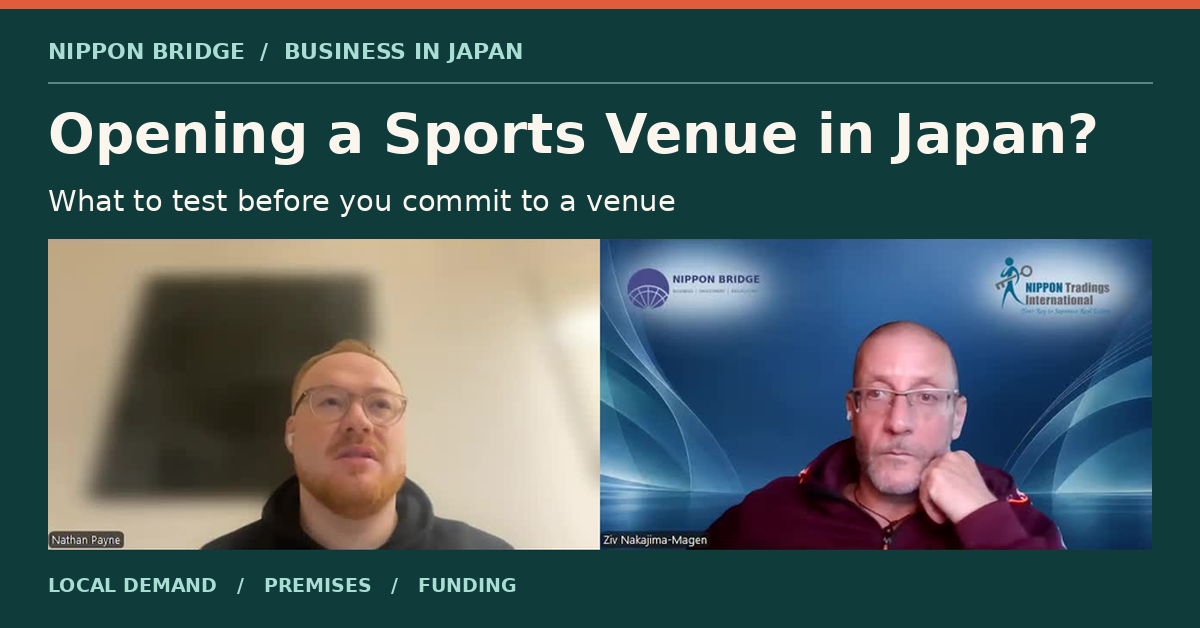
Nathan and his partner are exploring one version of that idea, an indoor padel club. Kyoto is high on their list. It appeals to them as a place to live, and they want to find out whether it could work for the business as well.
In Nathan’s first conversation with Ziv, the idea turned into a set of practical questions. Who would come back regularly? What kind of space would work? How much would it take to get the doors open, and who would run the venue day to day?
Here’s how to apply those questions to a venue of your own.
Find out who would come back every week
Start with the people who could become regulars. A group of friends booking a weekly game, a parent signing a child up for lessons and a company planning a team event may all be looking for a sports venue. Their booking habits are different, and those differences matter when you’re trying to fill a weekly schedule.
Speak with potential customers in each area you’re considering. Ask where they go now, what they pay, when they would book and how far they’d travel. A trial session or a sign-up tied to a specific area and time gives you something more concrete to work with than a general expression of interest.
Look at the weekly calendar early. For example, three courts with four bookable evening hours each give you 12 court-hours for that evening. The same exercise works for a studio that sells places in a class or a gym that manages capacity by session. If most people want the same two hours after work, test what might draw bookings at quieter times. Beginner lessons, leagues and group sessions are a few options to ask customers about.
Compare cities using spaces you could actually rent
A city can look promising until you see what’s available within reach of your likely customers. When you compare two cities, pick a few realistic areas and look for actual premises in each. Map how people would get there after work and on weekends. Check parking and public transport based on how your customers expect to travel.
For each building, record the usable floor area, clear ceiling height, column layout, ventilation and the space available for reception and changing. Ask the landlord about the proposed use, the work they’d allow and who would pay for it. Make a list of what the activity needs. A climbing gym may need to check whether the building can support the proposed wall installation. A studio may need to focus on flooring, noise and room to move safely. An equipment supplier or fit-out specialist can help assess the layout. Get local professional advice on suitability and any approvals before committing to a site.
Then take the trip yourself, at the times you expect people to book. A space that looks close on a map can feel like a different proposition after a station transfer and a long walk with sports gear.
Nippon Bridge insight
Nathan’s call raised two questions about location. Where could the venue attract repeat bookings, and where could he and his partner see themselves living? Put both on the same shortlist. Visit a prospective site as a customer would, then spend time in a neighbourhood you’d consider living in.
Build the funding case around a specific venue
Once you have a plausible site, you can give a potential backer a clearer picture of what the money would cover. Separate the cost of opening from the cost of staying open while bookings build.
Opening costs might include the lease deposit, equipment and installation, lighting, fit-out, booking software and launch marketing.
Running costs might include rent, staff, utilities, maintenance and customer support.
Use quotes where you can. Mark estimates clearly and show how the plan changes if the fit-out costs more or weekday bookings grow slowly. If you’re considering crowdfunding, decide what it would fund and what you could reasonably promise backers. The same work helps if you’re pitching to a handful of investors.
Talk through who would handle bookings, lessons, maintenance and customer enquiries. If you’d like to see how those decisions could shape your own working week, read Would a Business in Japan Fit Your Life?.
Put two locations side by side
For each location, write down who you expect to book, which premises are worth visiting, what your budget is based on and how you’d cover a normal week of operations. Then choose the biggest unknown to test next. In one city, that could mean checking whether customers will travel to a particular building. In another, it could mean asking an equipment supplier whether the space can accommodate the layout you have in mind.
If you’re planning from overseas, JETRO’s Invest Japan Business Support Centers are a starting point for information on establishing a business presence in Japan.
If you’re working through a shortlist of your own, explore Nippon Bridge’s business setup support in Japan and tell us what you’re planning.
This article is for informational purposes only and does not constitute financial, legal, or immigration advice. Consult qualified professionals for your specific situation.